
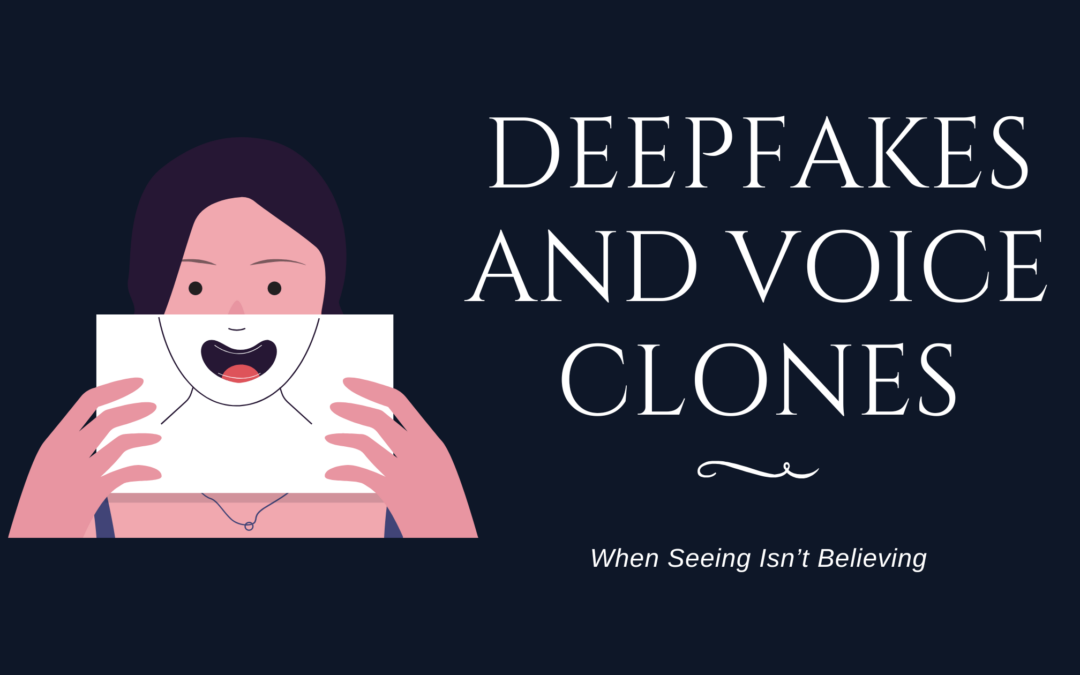
In an age where artificial intelligence can replicate a person’s face and voice with chilling accuracy, the phrase “seeing is believing” no longer holds up. Deepfakes and voice clones—forms of synthetic media created using advanced AI algorithms—are blurring the line between fact and fabrication. While these tools offer exciting possibilities for entertainment and accessibility, they are increasingly being misused in scams, political deception, and disinformation campaigns.
At their core, deepfakes use machine learning to superimpose one person’s face onto another’s body in a video. Similarly, voice cloning technology can generate convincing audio that mimics a real person’s speech patterns, tone, and inflections. The results can be eerily realistic—and that’s exactly what makes them dangerous in the wrong hands.
One of the fastest-growing threats is the use of synthetic media in financial scams. Criminals are now using voice clones to impersonate CEOs, family members, or trusted figures to request wire transfers or sensitive information. In some cases, employees have been tricked into transferring millions of dollars based on what they thought was a legitimate call. These scams are nearly impossible to detect in real time, as the cloned voices sound authentic enough to fool even close acquaintances.
The political implications are equally alarming. Deepfakes have been used to create fake speeches, doctored footage of politicians, and false endorsements. Even when identified as fake, these videos can go viral before fact-checkers intervene—sowing confusion, undermining trust in institutions, and inflaming partisan divides. The speed at which false content spreads far outpaces the ability to debunk it, allowing disinformation to take root before the truth can catch up.
Voice cloning also plays into this ecosystem of doubt. A fabricated phone call or leaked audio clip can be enough to damage a public figure’s credibility, especially in the heat of an election cycle. Unlike traditional misinformation tactics, which relied on misquoting or taking statements out of context, synthetic media manufactures entirely new events that never happened—yet feel believable to the viewer or listener.
This erosion of reality has deeper consequences. When any video or audio can be faked, the public may start to distrust all media, including legitimate recordings. This phenomenon, known as the “liar’s dividend,” allows bad actors to dismiss real evidence as fabricated, further muddying the waters. In essence, the mere existence of deepfakes gives cover to those trying to discredit authentic reports.
To combat these threats, governments, platforms, and researchers are racing to develop detection tools. Watermarking, metadata analysis, and AI-based authenticity checks are in progress, but these solutions are not foolproof. Meanwhile, platforms like YouTube and Meta are updating policies to label synthetic content and ban malicious deepfakes, though enforcement remains a challenge.
Ultimately, the responsibility doesn’t just lie with tech companies or lawmakers—it also falls on the public to stay vigilant. Digital literacy, critical thinking, and skepticism are our best defenses in this new media landscape. The ability to question what we see and hear is no longer just a journalistic virtue—it’s a civic necessity.
In the age of deepfakes and voice clones, truth is not only stranger than fiction—it’s harder to find.